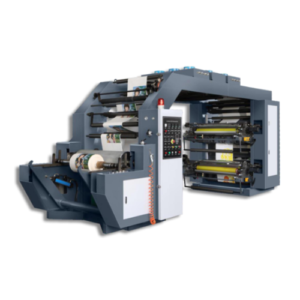
To know the difference between offset printing and letterpress. You need to first understand the basic principles on which each of them works. Let’s get started!
Offset Printing
Offset printing is the process of applying an image to paper or another surface by positioning an offset cylinder between the corresponding surface and the ink reference. This feature allows for more even coloring matter distribution as well as an increase in the useful lifetime of the manufacturing equipment. It’s important to remember that offset printing is a type of flat and plain printing (it is it that is most often opposed to high, which, in turn, is also presented in several versions). In this case, the offset method differs greatly from others referred to as “flat.” Nonetheless, because of its prevalence in the relevant section, it is frequently used interchangeably with letterpress as a standalone innovation.
Letterpress
On the other hand, Letterpress is a type of typographic technique in which the printed elements are significantly larger than the gaps. Their physicochemical properties may be the same, but this is unimportant. In fact, the coloring matter only appears on the printable elements and is displayed on paper in the shape that corresponds to their contours. The colorant is typically applied directly, with no intermediary mechanisms. This printing method is one of the oldest in the world. It contributed to the printing of the first newspapers and publications. As previously stated, the type of seal in question is divided into several varieties. The use of metallic elements is a traditional viewpoint. Elasticized printing constituents are used in flexographic letterpress printing.
Difference between offset printing and letterpress
Letterpress printing is the transfer of a plate to paper. In the case of traditional letterpress, the plate is comprised of individual lead-cast letters that are locked together to “forme” a “plate.” Letterpress assumes that publishing elements are placed above the spaces on the printing plate. Wrong-reading cast metal type and elevated inscriptions are composed in a metal frame and held in place in letterpress printing. A roller transfers ink to the metal image, after which it is squeezed onto a sheet of paper.
Offset is a plate that is transmitted to a transfer medium (termed an Offset Matt) and then to paper (although, in hypothesis, the offset can be multiple transfers into offset Matt’s until being applied to paper). Offset supposes that both the printing and space elements of the printing surface are placed at an identical level. This type of printing is done from a flat plate with a right-reading picture that holds oil on a water-resistant membrane. The image is moved to a rubber “blanket” (which already consists of a wrong-reading ink image), and the ink is transmitted to the paper by exerting pressure.
Overall, the distinction between offset printing and letterpress printing is significant, but both serve important functions and are required for a variety of publishing activities.